


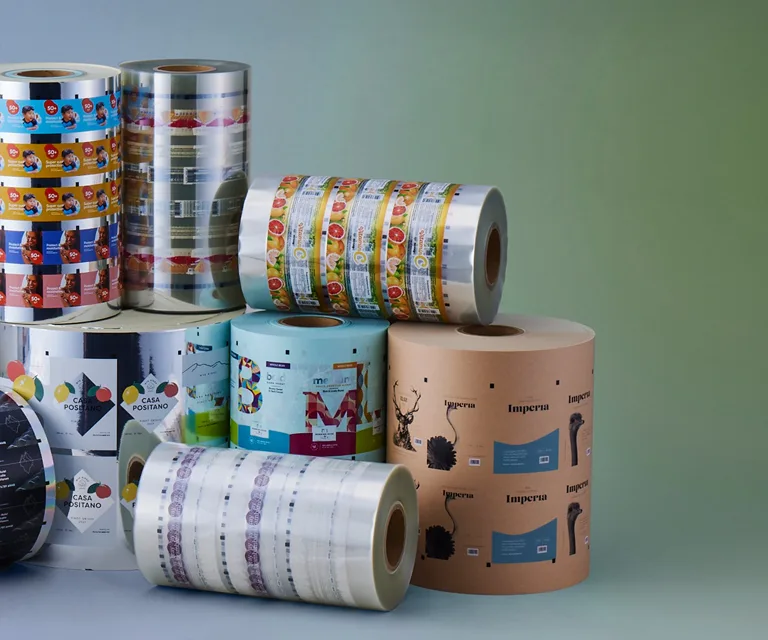
The Australian labels and packaging sector is evolving rapidly, shaped by technological advancements, changing consumer expectations, and increased demand for agility in production. Based on insights from Konica Minolta’s global industry research, here are the key trends reshaping the market in 2026 – tailored specifically for Australia.
1. AI, Automation and Smarter Production Ecosystems
Artificial intelligence and machine learning are now embedded across the label production workflow, enabling end-to-end automation that supports faster job setup, consistent quality, reduced waste, and fewer manual touchpoints. For Australian label printers, this aligns with increasing demand for shorter runs, faster turnarounds, and more flexible production to support fragmented SKUs and personalisation trends. As more local producers diversify product ranges, digital workflows will become essential. Automation will play a greater role in reducing manual touchpoints, easing labour pressures, and enabling converters to profitably handle frequent changeovers.
2. Growth of Smart Labels and Connected Packaging
Smart label technologies continue to rise as Australian brands invest more heavily in supplychain visibility, authentication, and richer consumer engagement.
These technologies offer practical advantages in logistics, retail, and promotional campaigns – and digital production makes it easier to integrate them efficiently.
These technologies help Australian brands improve inventory accuracy, reduce losses and build new promotional and experiential interactions.
3. Premiumisation and the Push for HighImpact Labels
Premiumisation remains a major force in categories such as beverages, gourmet foods and boutique FMCG. Australian consumers respond strongly to tactile finishes, metallic effects, foils, and creative embellishments.
Digital embellishment technology is making it easier and more cost effective for converters to offer these high value finishes in shorter runs.
This aligns with Australian consumer behaviour, especially in competitive shelf environments where packaging must work harder to influence purchase decisions. Growth in embellishment – including digital foils, textured varnishes and special effects – will continue to support brand differentiation.
4. Extended Content Labels (ECLs) Gain Momentum
Extended Content Labels – such as multilayer or booklet-style labels – are becoming increasingly important, particularly in pharmaceuticals, cosmetics and industrial goods.
Growing regulatory and product information requirements in Australia make ECLs a practical solution for brands needing more space for dosage information, safety instructions, multilingual content, or sustainability messaging.
5. Compact, Agile Production Lines
Label printers are shifting toward more compact, flexible production environments that can handle rapid artwork changes, fragmented SKUs and seasonal or regional product variants.
Digital platforms excel in short-run agility, enabling converters to respond quickly without the inefficiencies associated with analogue setups.
6. Digital Printing Continues Its Rapid Acceleration
Digital printing is now firmly established as a mainstream production method. For Australian label printers, its benefits include more efficient short to medium runs, lower waste, faster changeovers, precise version control, predictable cost structures, simplified operator skill requirements.
As brands demand more frequent updates, personalisation and SKU variation, digital printing offers the flexibility and profitability needed to meet 2026 market expectations.
7. Rising Focus on Sustainability and Localised Production
Sustainability will continue to be a major driver for local converters and brands.
Key focus areas include reduced production waste, recyclable and responsibly sourced materials, shorter more localised supply chains, smarter batch production to avoid obsolete stock.
Digital production supports these priorities through efficient short runs, smart versioning, and reduced environmental impact compared to traditional processes.