


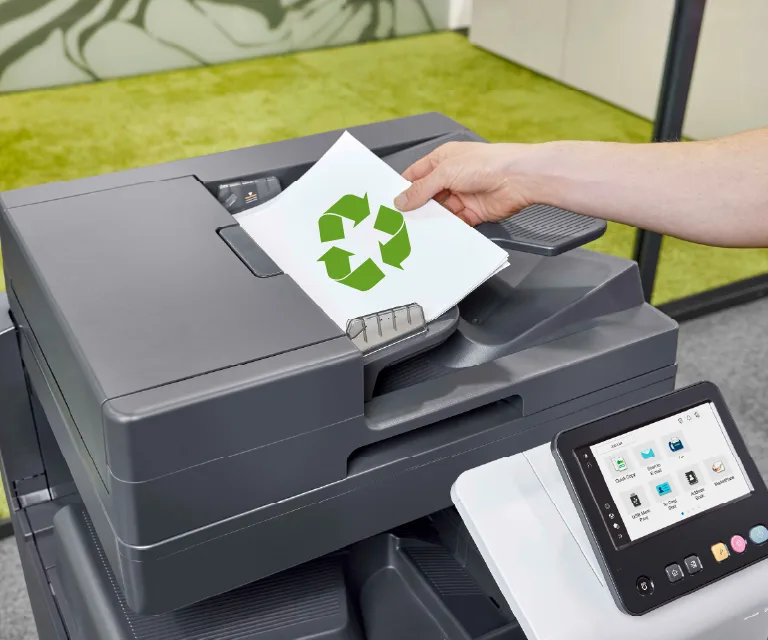
As Australian organisations continue to prioritise sustainability, everyday workplace processes are evolving. Printing remains an important part of business operations, and with the right approach, it can play a positive role in supporting environmental goals.
Eco‑friendly office printing is about making smarter choices. By using the right technology, materials, and settings, businesses can reduce waste, improve efficiency, and lower costs, all while maintaining the benefits that print provides.
What Is Eco‑Friendly Printing?
Eco‑friendly printing focuses on reducing environmental impact across the print lifecycle. This can include:
- Using recycled or responsibly sourced paper
- Reducing unnecessary print jobs
- Optimising printer settings to minimise waste
- Selecting energy‑efficient printing devices
- Monitoring and managing print usage
Printing is still an essential business toll, but small adjustments in how it is used can deliver meaningful improvements.
Why Sustainable Printing Matters in Australia
Supporting Smarter Resource Use
Paper, energy and consumables are all part of day-to-day printing. Using them more efficiently helps reduce overall resource consumption while maintaining productivity.
Reducing Waste
Uncollected print jobs and single-sided printing are common sources of unnecessary waste. Simple changes to print behaviour and system settings can significantly improve efficiency without disrupting workflows.
Managing Costs
Print-related costs go beyond paper. Ink, toner, maintenance and energy all contribute. Streamlining print environments helps organisations control these costs while improving sustainability outcomes.
Aligning with Business Goals
Many organisations now have environmental targets or ESG commitments in place. Print optimisation is practical and achievable way to contribute to these goals.
What to Look for in Sustainable Print Services
Modern print technology plays a key role in enabling sustainable practices. When reviewing your print environment, consider the following capabilities:
1. Secure Print Release
This ensures documents are only printed when the user is at the device, helping eliminate uncollected print jobs.
2. Default Eco Settings
Setting duplex printing and black-and-white as the default can significantly reduce paper and toner usage without requiring users to change behaviour.
3. Print Visibility and Reporting
Access to clear print data allows businesses to understand usage patterns, identify opportunities or improvement and make more informed decisions.
4. Efficient Device Technology
Newer multifunction devices are designed to use less energy and optimise performance, helping reduce environmental impact over time.
Supporting Australia’s Sustainability Progress
Australia continues to make strong progress in improving recycling and resource recovery. Paper remains one of the most widely recycled materials, and many organisations are already contributing to a more circular approach through responsible purchasing and waste management.
By combining recycled materials with smarter printing practices, businesses can further support these national efforts.
Our Approach to Sustainable Printing
At Konica Minolta, we see sustainability as an opportunity to help organisation work more efficiently while reducing environmental impact, without compromising the value print delivers. Our approach focuses on combining smart print management with advanced device technology to support better outcomes across the entire print environment.
Konica Minolta’s bizhub multifunction devices are also designed with sustainability in mind. Features such as energy-efficient operation, low power consumption in sleep mode and reduced fixing temperatures help minimise energy use in everyday printing. In addition, Simitri® V toner requires less energy during the printing process which can assist in lower emissions.
Beyond energy efficiency, bizhub devices are built to support a more circular approach to printing. Extended-life consumables help reduce the frequency of replacement, while high levels of recycled materials are used in device components. This is complemented by established recycling programs for toner bottles and end-of life equipment, helping organisations reduce waste and extend the lifecycle of resources.
When combined with print management tools such as secure print release, default eco settings and usage tracking, these technologies enable businesses to actively manage their print environment in a more sustainable and cost-effective way.
Final Thoughts
Eco-friendly printing is not about removing print from the workplace. It is about using it more intelligently.
With the right technology, visibility and support in place, organisations can reduce unnecessary printing, improve efficiency and lower operational costs while continuing to benefit from print as an essential business tool.
By taking a considered approach to both print behaviour and print technology, businesses can make meaningful progress towards their sustainability goals while maintaining productivity and performance across their operations.


